


Seamless Steel Pipes
Why Choose Tianjin Baolai Steel Industry Group Co.,Ltd
Tianjin Baolai Steel Industry Group Co., Ltd is a comprehensive company, which focuses on steel pipes and other steel products. Established in 1991, Baolai is among the first few specialized companies that develop and manufacture ordinary and special-diameter steel pipes. We manufacture API, ASTM, BS, DIN, JIS, and EN standards pipes with a galvanizing facility. Our annual capacity is approximately 4800,000MT in various specifications and export 150,000MT to all over the world.
Rich Experience
We are the leading steel pipes manufacturer, having established since 1991 with more than 30 years of experience.
Wide Product Range
We develop and manufacture ordinary and special-diameter steel pipes, API, ASTM, BS, DIN, JIS, and EN standards pipes, having eight steel pipe production lines and five hot-dipped galvanizing production lines.
Professional Technical Team
A dedicated team is tasked to provide technical support to advise the proper usage of steel and assist customers in using the products to their best advantage.
Complete Qualifications
Our company has two integration management system evaluation certificates, China's top 500 manufacturing industries, ISO 45001, ISO 14001, and ISO 9001. Our products have API 5CT -0802, EN 10217 Directive 2014/68/EU, EN 10217 material according to DGRL 97/23/EC, Quality-Management-System, Quality-Assurance, LR 3, LR 2, LR 1, UL ASTM A852, UL ASTM A53/ ASTM, API 5L-0552 certifications.


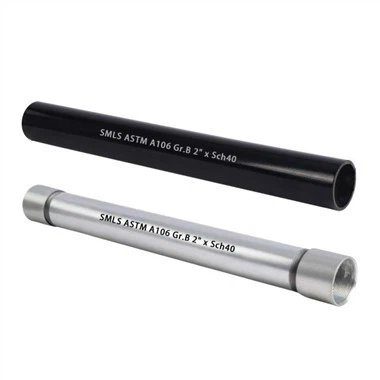

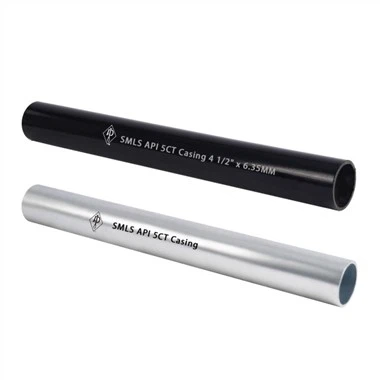


A seamless pipe is a long strip of steel with a hollow section and no seams around it. Baolai Steel Pipes Co.,ltd, a very professional manufacturer, has specialized in producing seamless pipes for more than 30 years.
What Is Seamless Steel Pipe?
Seamless steel pipes are perforated from whole round steel, and steel pipes without welds on the surface are called seamless steel pipes. According to the production method, seamless steel pipes can be divided into hot-rolled seamless steel pipes, cold-rolled seamless steel pipes, cold-drawn seamless steel pipes, extruded seamless steel pipes, and top pipes. According to the cross-sectional shape, seamless steel pipes are divided into two types: round and special-shaped. Special-shaped pipes include square, oval, triangular, hexagonal, melon seed, star, and finned pipes. The maximum diameter is 900mm and the minimum diameter is 4mm. According to different purposes, there are thick-walled seamless steel pipes and thin-walled seamless steel pipes. Seamless steel pipes are mainly used as petroleum geological drilling pipes, cracking pipes for petrochemical industry, boiler pipes, bearing pipes, and high-precision structural steel pipes for automobiles, tractors, and aviation.
Features of Seamless Steel Pipes

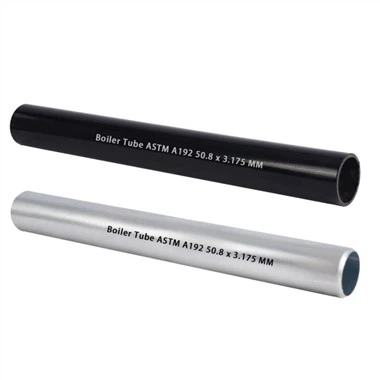


- Seamless Pipes have a higher price per ton than ERW pipes, ranging from 3 to 8%. But the unit length of seamless pipe is only half of ERW pipe.
- Seamless pipes can resist high pressure, temperature, stress & corrosive atmosphere.
- They find wide applications in Oil & Gas, Refining, Petrochemical, Chemical, Fertilizer, Power, Automotive, Bearing, Mechanical & Structural.
- They have tolerance for OD and ID.
- They are thick and tolerant.
- They are strong under high pressure and temperature. The seamless pipe is more robust because it is made out of a single piece of steel. These pipes can withstand high pressures, so they are used for high-pressure applications.
- They have excellent corrosion resistance. The manufacturing process does not include any welding, and because of this, it is seamless.
- They have a smooth surface finishing.
- They are resistant to damage and cracking.
- It is easier to bend compared to other pipes.
- This pipe’s manufacture does not require much energy to perform. This makes it more cost-effective than other types of steel pipes.
- It comes with close dimensional tolerance.
- There are different methods used to make steel pipes. Some processes use solid round billets, while others use continuous casting methods.
- The seamless pipe is made by a process that involves forging plus an extrusion process which means that a solid round billet is rolled or pressed to create a hollow shell which is then elongated to create a pipe.
- Steel pipes are used extensively in the oil & gas industry. You’ll find seamless and welded pipes there – both types have properties that make them ideal for the given situations.

Carbon Steel Seamless Pipes
Carbon steel seamless pipes are extensively applied in the nuclear device, gas conveyance, petrochemical, shipbuilding and boiler industries, with characteristics of high corrosion resistance combined with suitable mechanical properties.
Chrome Moly Alloy Steel Seamless Pipes
Chrome moly alloy seamless pipe is a tubular product with enhanced levels of chromium and molybdenum. The added chromium helps increase the steel's hardenability and corrosion resistance, whereas the improved molybdenum helps bolster its toughness and corrosion resistance.
Stainless Steel Seamless Pipes
Stainless steel pipe is a kind of hollow long round steel, widely used in petroleum, chemical, medical, food, light industry, mechanical instrumentation, and other industrial transmission pipeline and mechanical structure parts. In addition, it is lighter in weight with the same bending and torsional strength, so it is also widely used in the manufacture of mechanical parts and engineering structures. It is also often used as furniture and kitchen utensils..
Greater Strength
Seamless steel pipes are made from solid steel billets, which makes them stronger and more durable than welded pipes. This makes them ideal for use in high-pressure applications.
Uniformity
Seamless steel pipes are made to uniform thickness and size, which means that they have consistent strength mand performance throughout their entire length. This makes them easier to work with and reduces the likelihood of failure due to weak spots or defects.
Smooth Surface
Seamless steel pipes have a smooth surface finish, which reduces friction and resistance to fluid flow. This makes them ideal for use in fluid transport applications, such as in the oil and gas industry.
Corrosion Resistance
Seamless steel pipes are often coated with a layer of protective material, such as zinc or epoxy, to prevent corrosion. This makes them ideal for use in corrosive environments, such as offshore drilling rigs.
Cost-Effective
Although seamless steel pipes can be more expensive than welded pipes, they offer greater strength and durability, which can lead to longer service life and lower maintenance costs over time. They are also easier to install and require less downtime for maintenance or repairs.

Fertilizer Industry
Steel seamless pipes come in handy in several sectors of the fertilizer industry. The regions of application of the lines in the fertilizer industry mainly include piping system equipment, high-pressure tubes in Melamine plants, and heat exchanging systems in Urea synthesis ethylene plants. Other than the above mentioned areas, seamless steel pipes are also used in a variety of sectors in the industry.
Power Generation Industry and Environmental Technologies
Steel seamless pipes and tubes are used primarily as heat exchangers in giant power plants and the energy department. Environmental uses and waste incineration plants also utilize the same application style known as reheater superheaters.
Chemical and Petrochemical Industries
Steel seamless plants prove highly useful in chemical and petrochemical industries. The area of application in the chemical and petrochemical sectors mainly includes the following: High-pressure pipes in Melamine plants, elaborate piping systems and heat exchanging systems of urea synthesis ethylene plants.
Curate Ship-building Parts for International Clients
Various processes of ship-building require the use of steel seamless pipes and tubes. While it is difficult to export a readymade ship, it is comparatively easier to export parts that will be used to build the ship. As per the request of international dealers, a variety of steel seamless pipes are exported to distant lands. These tubes are then used in the manufacturing process of shipbuilding.
Oil and Gas Industries
Steel seamless pipes are a common requirement for oil casing and tubing for offshore and onshore Oil & Gas transfer. The oil extracted offshore needs large tubes to be transferred from one reservoir to another. Not all materials can support unprocessed raw oil. Steel seamless pipes are a perfect application for such purposes.
Engineering and Construction Industry
Steel seamless pipes are highly used in engineering and construction industries in the following sectors: automobile designing technology, food manufacturing industry, measurement and control technology, hydraulic press, cylinders and pumps, etc. Stainless Steel Seamless pipes are used as a half-finished product in the departments mentioned above. They are used as fittings and tubes installed in big machines or as a half-finished product for machined parts.
Automotive Industry
In the automotive sector, DMV items are explicitly used in the following areas: Other than these, they are also used in hydraulic braking systems.
How to Choose Seamless Steel Pipes

How to Choose Under Different Pressures
The higher the pressure of the conveyed medium, the thicker the wall thickness of the pipe, and generally the higher the requirements for pipe materials.When the medium pressure is above 1.6MPa, seamless steel pipes or non-ferrous metal pipes can be used. When the pressure is very high, such as in the production of synthetic ammonia, urea and methanol, the medium pressure of some pipes is as high as 32MPa. High-pressure seamless steel pipes made of 20# or 15CrMo are generally used. Pipes on vacuum equipment and oxygen pipes when the pressure is greater than 10MPa generally use copper tubes and brass tubes.
When the medium pressure is below 1.6MPa, welded steel pipes, cast iron pipes or non-metallic pipes can be considered. However, the pressure that cast iron pipes bear from the medium shall not exceed 1.0MPa. The medium pressure that non-metallic pipes can withstand is related to the type of non-metallic material. For example, for rigid polyvinyl chloride pipes, the operating pressure is less than or equal to 1.6MPa; for reinforced polypropylene pipes, the operating pressure is less than or equal to 1.0MPa; for ABS pipes, the operating pressure less than or equal to 0.6MPa.For water pipes, when the water pressure is below 1.0MPa, welded steel pipes made of Q235A are usually used; when the water pressure is greater than 2.5MPa, 20# seamless steel pipes are generally used.
Selection of Pipe Materials under Different Chemical Properties of Media
To transport different media, different pipe materials are used.Neutral media generally do not have high material requirements, so ordinary carbon steel pipes can be used; for acidic or alkaline media, acid-resistant or alkali-resistant pipes must be selected. Strong acids and strong bases and weak acids and weak bases have different requirements for the use of pipes. The same acid or alkali has different material requirements for pipes with different concentrations.
For transporting water and steam, carbon steel pipes are sufficient. In urea plants, stainless steel pipes are generally used to transport carbon dioxide, because carbon dioxide forms carbonic acid when it meets water, and carbonic acid has a corrosive effect on ordinary steel pipes. Carbon steel pipes can be used for fuming sulfuric acid, but carbon steel pipes cannot be used for dilute sulfuric acid, because dilute sulfuric acid and carbon steel can react chemically and corrode carbon steel, so duralumin pipes can be used.

Our Factory
We have a complete factory production, quality supervision and delivery.


Our Certificate
At present, the company has ISO9001, ISO14001, ISO45001, Evaluation certificate of the integration of industrialization and industrialization management system, China's Top 500 Manufacturing Private Enterprises certifications.


Ultimate FAQ Guide to Seamless Steel Pipes
Q: What are seamless steel pipes?
Q: What is the difference between seamless and welded steel pipes?
Q: What are the advantages of seamless steel pipes?
Q: What are seamless steel pipes used for?
Q: What is the manufacturing process for seamless steel pipes?
Q: What are the different types of seamless steel pipes?
Q: What are the different types of end connections for seamless steel pipes?
Q: What is the maximum temperature that seamless steel pipes can withstand?
Q: What is the maximum pressure that seamless steel pipes can withstand?
Q: What is the difference between seamless steel pipes and stainless steel pipes?
Q: What is the difference between seamless steel pipes and galvanized steel pipes?
Q: How are seamless steel pipes tested for quality?
Q: What are the different surface finishes available for seamless steel pipes?
Q: What is the lead time for manufacturing seamless steel pipes?
Q: What are the disadvantages of seamless steel pipes?